Why A Small Room Costs So Much Per Square Foot
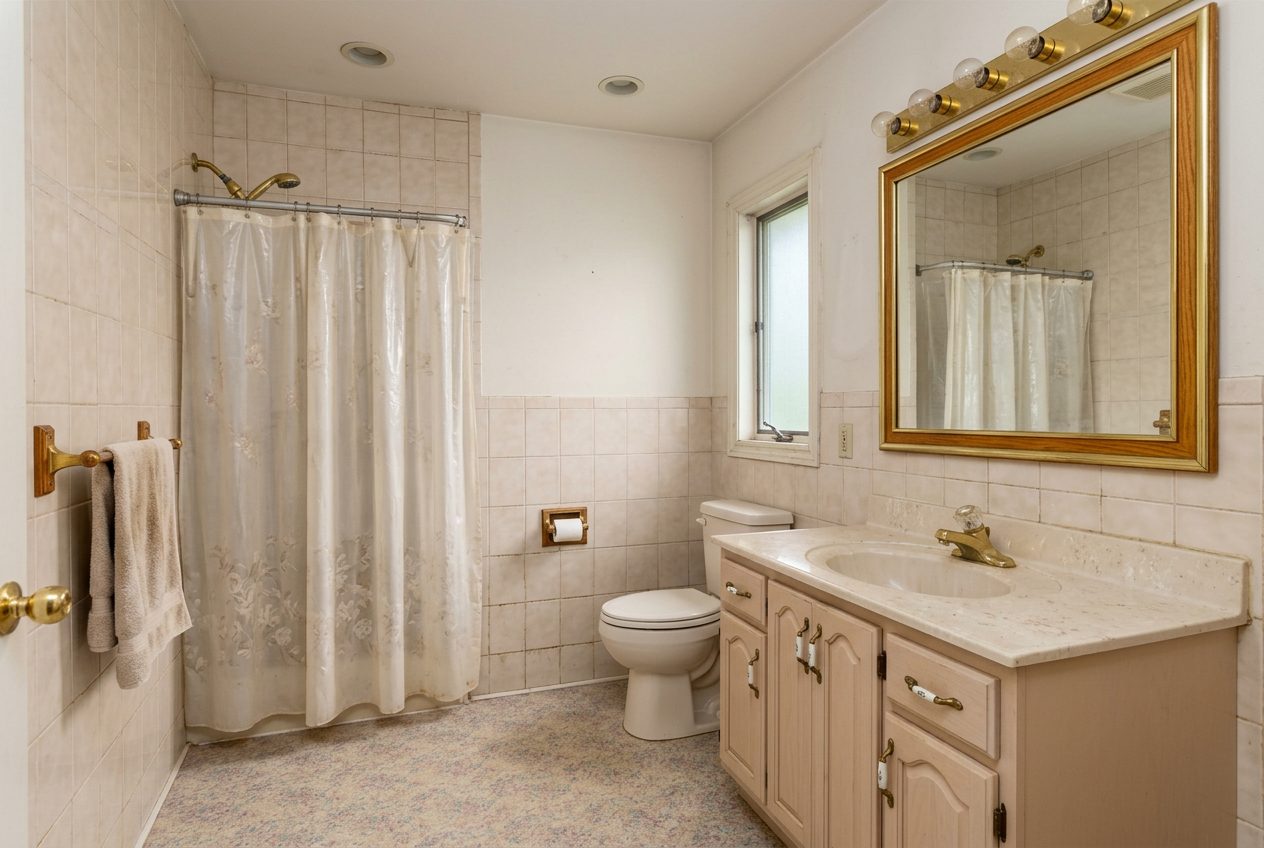
A bathroom is one of the few rooms where the cost per square foot regularly beats the kitchen, even though it is a fraction of the size. A 40 square foot bathroom remodel at $18,000 works out to $450 per square foot, while a 200 square foot kitchen remodel at $50,000 works out to $250 per square foot. The bathroom costs more per foot because nearly every surface in it is waterproofed, tiled, or plumbed, and none of those trades charge less just because the room is small.
A plumber setting a shower valve and running supply lines spends roughly the same time in a tiny bathroom as a larger one, because the fixture count, not the floor area, drives the labor hours. The same is true for the tile setter and the waterproofing contractor, both of whom are pricing the job by fixture count and square footage of tiled surface, which in a shower includes the walls, not just the floor.
Waterproofing & Tile Labor Are The Real Cost Drivers
Waterproofing a shower pan and walls correctly, with a membrane system rather than just a mortar bed, typically runs $1,200 to $2,800 in materials and labor before a single tile goes down. Skipping or shortcutting this step is the single most common cause of bathroom failures, leaks into the subfloor or the ceiling below, that show up twelve to twenty-four months after a remodel, well after the contractor is gone.
Tile labor is priced by square foot of tiled surface and by the complexity of the pattern, a straight-set 12 by 24 inch tile on a shower wall runs $8 to $15 per square foot installed, while a small format mosaic or a herringbone pattern can run $18 to $30 per square foot installed because the layout takes significantly longer to set and grout. In a shower with 60 to 80 square feet of wall and floor tile, that pattern choice alone can swing the bill by $1,500 to $2,500.
Tub To Shower Conversions
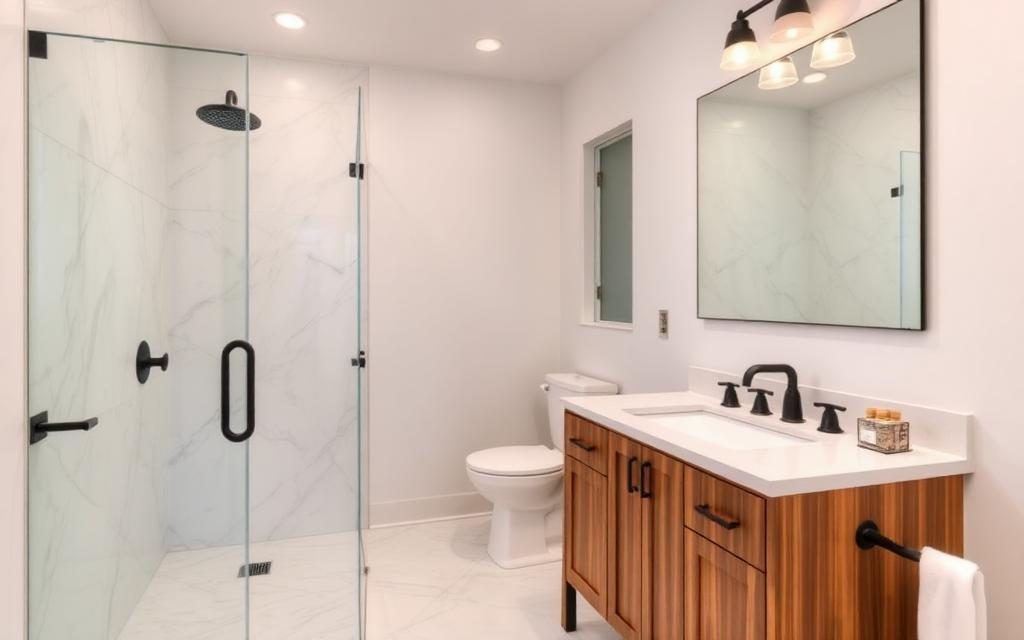
Converting a bathtub to a walk-in or curbless shower is one of the most requested bathroom changes, especially for aging in place or for a primary bathroom being upgraded ahead of a sale. A basic conversion that keeps the existing plumbing location plans in the $6,000 to $9,000 range. A curbless conversion with a linear drain, which requires lowering the subfloor to create the slope to drain, plans closer to $9,000 to $14,000 because of the added framing and plumbing work.
The plumbing rarely moves in a straightforward conversion since the drain and supply lines are usually reused, but the waterproofing scope goes up because a shower has exposed wall area on three or four sides that a tub with a surround did not need tiled and sealed to the same degree. This is the main reason a tub to shower swap looks simple on a rendering but prices out higher than homeowners expect.
- Basic conversion, existing plumbing reused: $6,000 to $9,000
- Curbless conversion with linear drain and subfloor work: $9,000 to $14,000
- Add a glass enclosure instead of a curtain: add $900 to $2,600
Ventilation & Why DIY Estimates Miss The Mark
A bathroom without adequate exhaust ventilation traps moisture that leads to mold on grout lines, peeling paint, and eventually damage to drywall behind tile. Code generally requires either an operable window or a mechanical exhaust fan ducted to the exterior, not just into the attic space, and retrofitting proper exterior ducting into an existing bathroom can run $350 to $900 depending on the duct run length and roof or wall penetration required.
Bathrooms are the room where DIY cost estimates are most often wrong because homeowners price the visible finishes, tile, vanity, fixtures, and forget the waterproofing membrane, the exhaust ducting, and the plumbing labor that never shows up in a big box store receipt. A homeowner pricing tile and a vanity at $6,000 in materials is often surprised when the finished remodel with labor lands at $16,000 to $20,000, and the gap is almost always waterproofing and plumbing labor that was never in the material estimate to begin with.